


How Much Sleep Do Adults Need? 6–8 Hours Explained
You’ve probably heard you need eight hours of sleep. But is that number actually right for everyone? Understanding how much sleep do adults need requires looking beyond simple averages to examine what the research actually shows, and how your individual circumstances factor in.
At Integrative Psychology, we see firsthand how sleep shapes every aspect of mental and physical health. As a behavioral medicine practice specializing in evidence-based treatments including CBTi (Cognitive Behavioral Therapy for insomnia), we help clients recognize that quality matters as much as quantity. This article breaks down the 6-8 hour recommendation, explains the science behind it, and helps you determine what your body actually needs for optimal functioning.
Why most adults need 6–8 hours
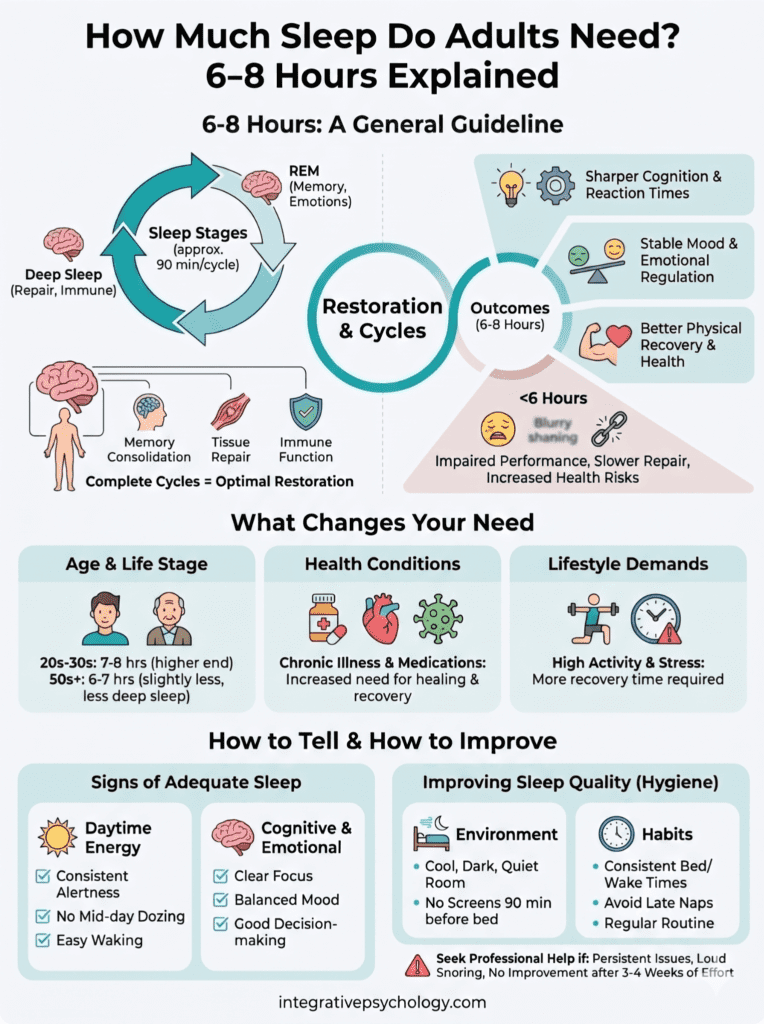
Your body operates on biological rhythms that require consistent rest periods to maintain health. The 6–8 hour recommendation comes from decades of sleep research examining what happens when adults get varying amounts of sleep. Studies consistently show that adults sleeping within this range demonstrate better cognitive performance, stronger immune function, and lower rates of chronic disease compared to those who sleep significantly less or more. Sleep is individual, and changes as we age. The younger we are, the more sleep we usually need, so young adults (~18-25yo) may need more sleep than 25yo+ since their brains and bodies are still experiencing significant growth. A good rule of thumb is to focus on sleep QUALITY, not quantity.
Sleep cycles and restoration
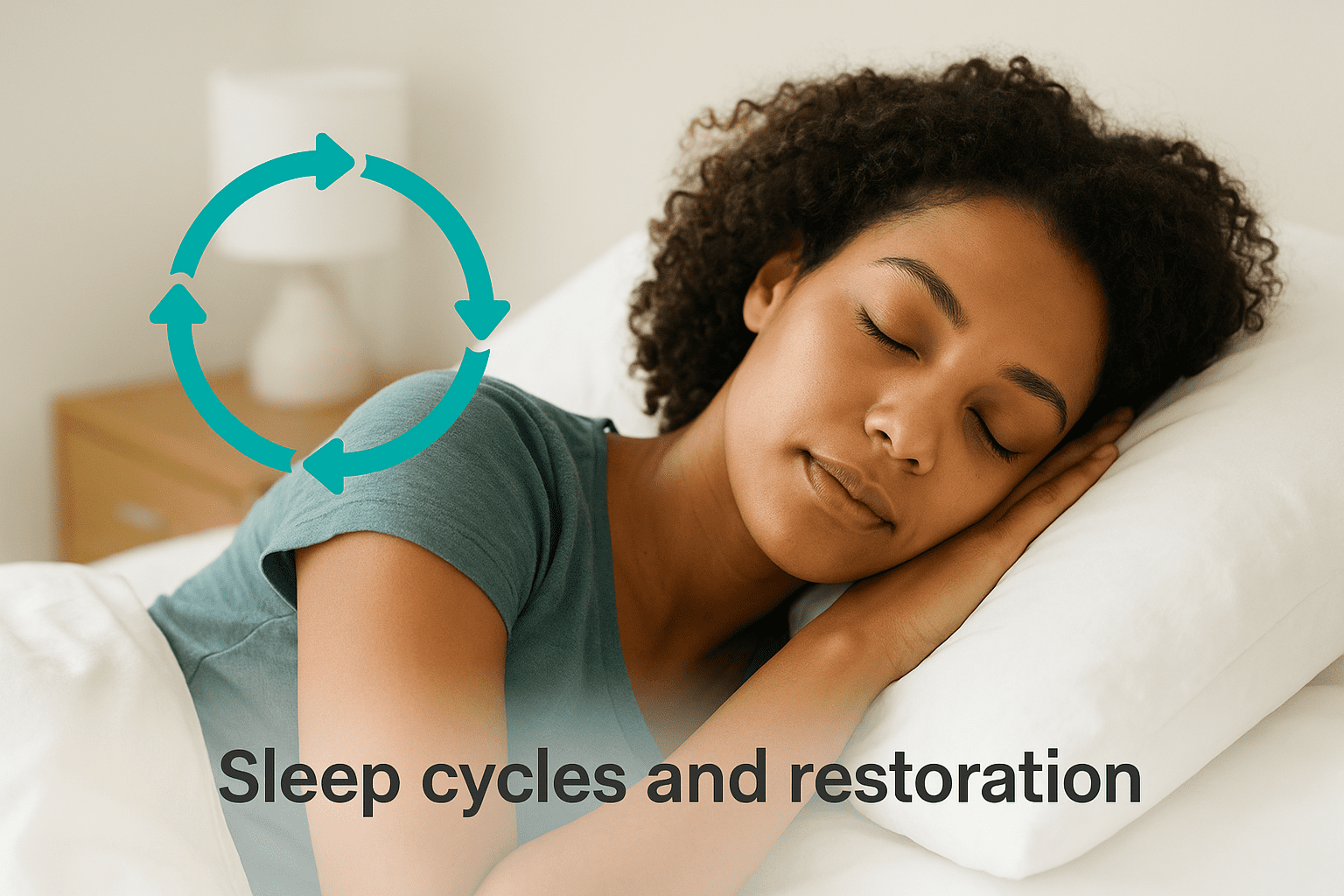
During sleep, your brain cycles through four distinct stages roughly every 90 minutes. You need multiple complete cycles each night to achieve adequate REM (rapid eye movement) sleep and deep sleep, which handle different restoration tasks. REM sleep consolidates memories and processes emotions, while deep sleep repairs tissues and strengthens your immune system. Getting fewer than 7 hours typically cuts these cycles short, preventing your body from completing essential maintenance work.
Most adults require at least four to five complete sleep cycles per night to feel and function optimally.
Physical and mental performance outcomes
The connection between sleep duration and health outcomes becomes clear when you look at real-world performance data. Adults who consistently sleep 6-8 hours show sharper reaction times, better decision-making abilities, and more stable moods than those operating on 5 hours or less. Your body also regulates hunger hormones, blood sugar, and inflammation during sleep, explaining why chronic short sleep correlates with obesity, diabetes, and cardiovascular disease. Research tracking large populations reveals that mortality risk actually increases at both extremes, with the lowest risk falling between 6 and 7 hours for most adults.
Physical recovery depends on adequate sleep too. Athletes, who expend more energy than the avereage person, sleeping less than 7 hours experience slower muscle repair and decreased athletic performance compared to those meeting the recommended range. Your body releases growth hormone primarily during deep sleep, making those hours critical for anyone doing significant physical work or exercise.
What can change how much sleep you need
While the 7-8 hour range applies to most adults, several factors shift where you fall within that window. Understanding these variables helps you determine your personal sleep requirements rather than assuming one number fits everyone. Your ideal sleep duration depends on biological factors, lifestyle demands, and current health status.
Age and life stage
Your sleep needs change subtly as you age through adulthood. Adults in their late teens and 20s often function best at the higher end of the range, needing closer to 7–9 hours. Once you reach your 30s and beyond, many people naturally sleep slightly less, with 6–8 hours feeling sufficient. This shift happens partly because older adults spend less time in deep sleep stages, though you still need adequate total rest for health maintenance.
Health conditions and medications
Chronic illnesses increase your body’s sleep requirements because healing and recovery demand extra rest. If you have diabetes, autoimmune conditions, or cardiovascular disease, you might need 8–9 hours consistently to manage symptoms effectively. Certain medications also affect how much sleep do adults need, with some causing drowsiness while others disrupt sleep quality, forcing you to spend more time in bed to feel rested.
Your body requires additional sleep when fighting illness or managing chronic conditions.
Physical activity and stress levels
People with physically demanding jobs or intense exercise routines need more recovery time than sedentary individuals. Mental stress also increases sleep needs because your brain requires extra processing time to handle emotional demands. You might function well on 7 hours during calm periods but need 8–9 hours when facing work deadlines or personal challenges.
How to tell if you get enough sleep
Determining whether you meet your personal sleep needs requires paying attention to how you feel and function during waking hours rather than simply counting hours in bed. Your daytime experience provides the most reliable indicators of sleep adequacy. If you regularly meet your sleep requirements, you should wake feeling reasonably refreshed and maintain stable energy throughout the day without excessive caffeine or multiple snacks to stay alert.
Daytime energy and alertness
Your energy patterns reveal whether you get adequate rest. Watch for consistent alertness during routine activities like driving, reading, or attending meetings. People getting sufficient sleep rarely experience that overwhelming urge to nap mid-afternoon, though some drowsiness after lunch is normal. If you struggle to stay awake during boring tasks or find yourself nodding off during conversations, you likely need more sleep. Notice whether you require multiple alarm clocks to wake or hit snooze repeatedly, both signs your body wants additional rest.
Your body tells you it needs more sleep through persistent daytime drowsiness and difficulty maintaining focus.
Emotional and cognitive signs
Sleep deprivation shows up clearly in your mental performance and mood stability. Adequate sleep allows you to concentrate on tasks without constant distraction, remember information easily, and make decisions without excessive deliberation. When asking how much sleep do adults need, consider whether you feel irritable, anxious, or emotionally reactive over minor frustrations. Poor sleep makes you more sensitive to stress and reduces your ability to regulate emotions effectively. Your thinking feels clearer and your mood stays more balanced when you consistently meet your sleep requirements.
How to improve sleep quality and consistency
Understanding how much sleep do adults need matters less if you struggle to actually achieve quality rest. Improving your sleep requires consistent daily habits rather than dramatic changes, with small adjustments to your routine and environment producing measurable results. Most people see improvements within two to three weeks of implementing basic sleep hygiene practices.
Create a sleep-friendly environment
Your bedroom setup directly impacts sleep quality. Keep your room cool (between 60-67°F works best for most people), dark, and quiet using blackout curtains or an eye mask if needed. Remove electronic devices that emit blue light, or at minimum, stop using screens 90 minutes before bed. Your mattress and pillows should support comfortable positioning without causing pain or requiring constant adjustment during the night.
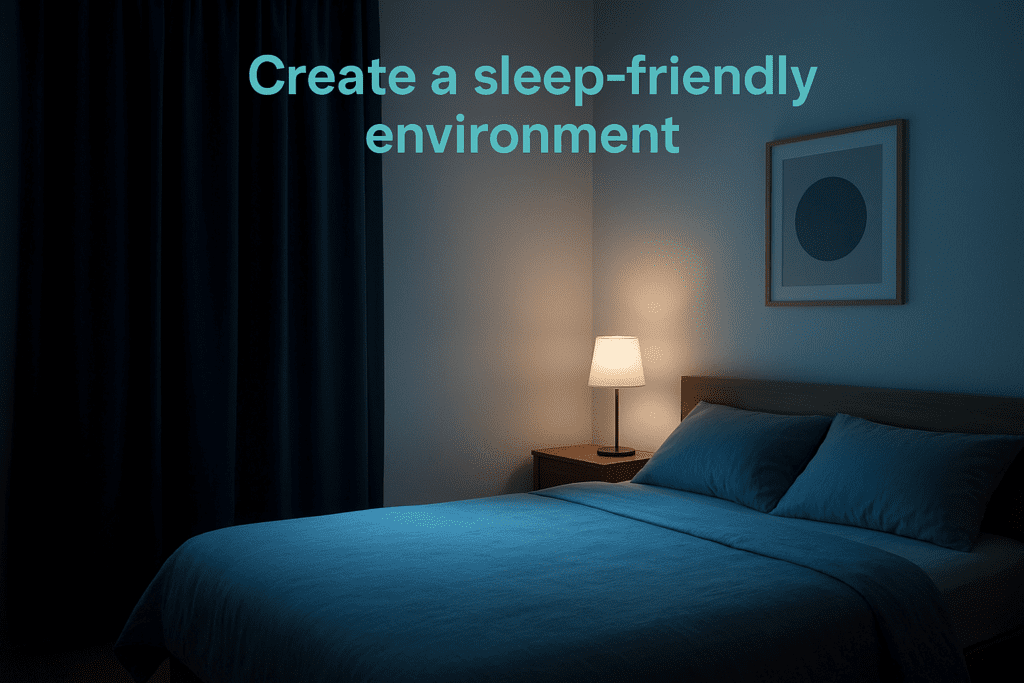
A consistently dark, cool bedroom helps your body recognize when sleep should occur.
Establish regular sleep and wake times
Your body operates on a circadian rhythm that benefits from predictability. Go to bed and wake up at the same times every day, including weekends, even if you sleep poorly one night. This consistency trains your body to feel sleepy at appropriate times. Avoid long naps after 3 PM since they reduce sleep pressure that helps you fall asleep at night. If you need to adjust your schedule, shift it gradually by 15-30 minutes every few days rather than making sudden changes.
When to talk to a clinician about sleep
Most sleep problems improve with consistent habit changes, but certain patterns signal when you need professional guidance. Recognizing these indicators helps you get appropriate treatment before sleep issues create serious health consequences. Consider scheduling an appointment if basic sleep hygiene practices produce no improvement after three to four weeks of consistent effort.
Warning signs that require evaluation
Seek professional help if you experience loud snoring with breathing pauses, which may indicate sleep apnea requiring medical treatment. Persistent difficulty falling asleep or staying asleep despite following good sleep habits also warrants clinical attention, especially when it affects your daily functioning for more than a month. Unusual movements during sleep, such as acting out dreams or repetitive leg jerking, need evaluation by someone trained in sleep disorders.
Chronic sleep problems affecting your work performance, relationships, or safety require professional assessment rather than continued self-treatment.
When self-management reaches its limits
You should consult a clinician if understanding how much sleep do adults need and implementing basic strategies fails to resolve your sleep issues. Depression, anxiety, or chronic pain often disrupt sleep patterns in ways that require integrated treatment addressing both the underlying condition and sleep itself. At Integrative Psychology, we use evidence-based approaches like CBTi (Cognitive Behavioral Therapy for insomnia) alongside physiological interventions when standard sleep hygiene proves insufficient. Medications that interfere with rest also need professional review to find alternatives or adjust timing.
Next steps for better sleep
Understanding how much sleep adults need gives you the foundation, but putting that knowledge into practice requires intentional action. Start by tracking your current sleep patterns for one week, noting when you go to bed, when you wake, and how you feel during the day. This data reveals patterns you might miss otherwise and helps you identify specific areas needing adjustment.
Choose one or two changes from this article to implement first rather than overhauling everything simultaneously. Maybe you set a consistent wake time or remove screens from your bedroom. Give each change at least two weeks before adding more, allowing your body to adapt gradually.
If sleep problems persist despite your efforts, professional support makes a significant difference. At Integrative Psychology, we offer evidence-based sleep treatment, including CBTi and mind-body interventions that address both the psychological and physiological factors affecting your rest. Better sleep becomes achievable when you combine self-management with expert guidance tailored to your specific needs.


