

10 Evidence-Based Stress Management Techniques That Work
Stress shows up in your body before you even realize what’s happening: tight shoulders, shallow breathing, a racing mind that won’t quiet down. Left unchecked, chronic stress erodes sleep quality, weakens immune function, and increases risk for anxiety and depression. The good news: stress management techniques backed by research can interrupt this cycle and restore your sense of control. You don’t need to white-knuckle your way through it or hope things eventually calm down.
At Integrative Psychology, we work with clients every day who are navigating overwhelming stress, whether it stems from work demands, health challenges, or life transitions. Our approach combines evidence-based psychotherapy with physiological interventions like biofeedback and mindfulness training, because stress lives in both the mind and body, and effective treatment needs to address both.
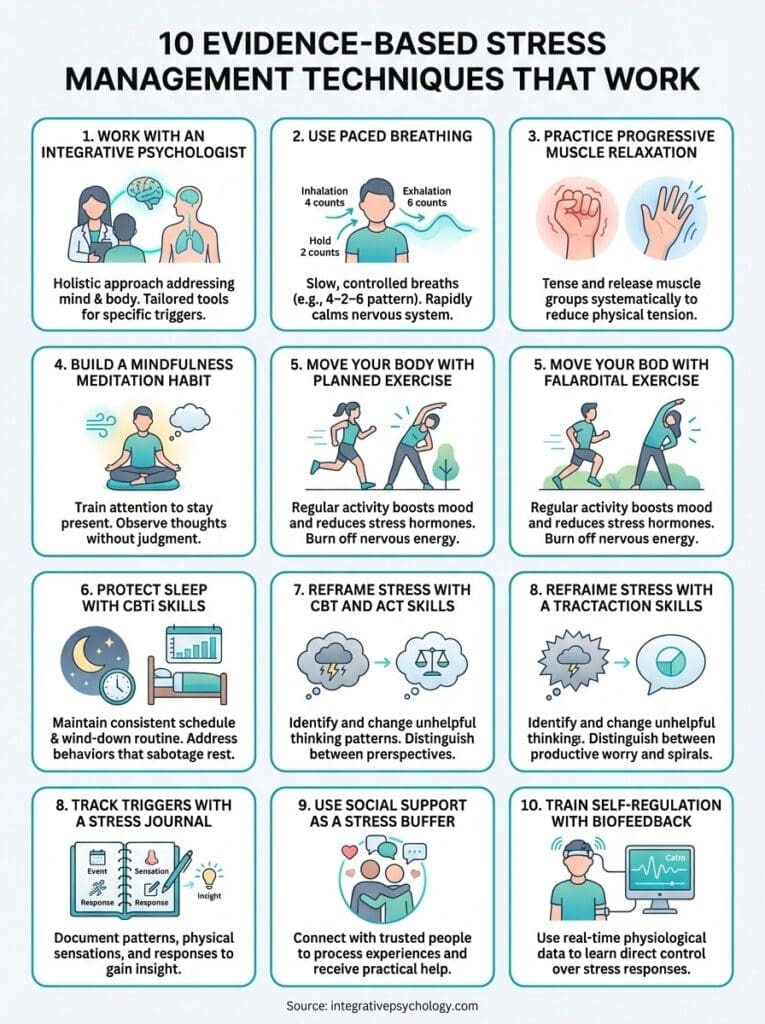
This article covers 10 proven strategies you can start using right away. Some are simple shifts you can implement today; others require more practice but offer lasting results. Each technique has solid research behind it, and many are methods we use directly in clinical work. By the end, you’ll have a clear toolkit for managing stress more effectively, not just surviving it.
1. Work with an integrative psychologist
When stress interferes with your daily functioning, professional support can accelerate progress in ways self-help strategies alone cannot. An integrative psychologist combines traditional talk therapy with physiological interventions, treating stress as both a mental and physical experience. This approach gives you personalized tools tailored to your specific triggers, symptoms, and goals, not generic advice pulled from a blog post.
Why it works
Integrative psychology addresses the full spectrum of how stress affects you. Your therapist can identify patterns you miss on your own, like how catastrophic thinking amplifies physical tension or how poor sleep compounds your stress response. The combination of evidence-based psychotherapy (like CBT or ACT) with physiological tools (like biofeedback or neurofeedback) creates multiple pathways for regulation. Research consistently shows that collaborative care models produce better outcomes than single-modality treatment, especially for chronic stress that impacts both mental and physical health.
How it looks in sessions
You start with an assessment that maps your stress triggers, current coping strategies, and how stress shows up in your body. From there, your psychologist builds a treatment plan that might include cognitive restructuring exercises, relaxation training, and behavioral experiments. Sessions are active, not passive. You practice skills in real time, receive immediate feedback, and adjust techniques based on what actually works for you. Between appointments, you apply what you learned and report back, creating a feedback loop that refines your approach.
“Professional guidance helps you identify blind spots in your stress response and accelerates skill-building through structured practice and accountability.”
Best for
This approach works well if you experience chronic stress that hasn’t responded to self-help methods, stress related to specific situations (like work transitions or health diagnoses), or physical symptoms with no clear medical cause. It’s also effective when stress triggers avoidance behaviors that limit your life or when you need help distinguishing between productive stress and harmful distress.
When to escalate care
If you notice signs of clinical anxiety or depression (persistent low mood, panic attacks, or intrusive thoughts), difficulty functioning at work or home, or reliance on substances to manage stress, professional support becomes essential rather than optional. Your primary care provider can help determine if additional medical evaluation is needed alongside psychological treatment.
2. Use paced breathing to downshift stress fast
Paced breathing gives you immediate control over your stress response without requiring equipment, privacy, or prior experience. When stress hits, your breathing becomes shallow and rapid, which signals danger to your nervous system and amplifies physical tension. By deliberately slowing your breath, you activate the parasympathetic nervous system and reverse the stress cascade within minutes. This technique ranks among the most accessible stress management techniques because you can use it anywhere, whether you’re sitting in traffic or preparing for a difficult conversation.

Why it works
Your breath directly influences your autonomic nervous system, the system that controls your stress response. Slow, controlled breathing increases heart rate variability (HRV), a marker of physiological resilience and emotional regulation. Research shows that breathing at a rate of 5 to 6 breaths per minute optimizes vagal tone, the nerve pathway that calms your body. Unlike many interventions that take weeks to show results, paced breathing produces measurable physiological changes within a single session.
How to practice it
Inhale through your nose for 4 counts, hold briefly for 2 counts, then exhale through your mouth for 6 counts. The longer exhale activates your calming response. Repeat this cycle for 3 to 5 minutes when you notice stress building. You can practice seated, standing, or lying down. Focus on making your breath smooth and controlled rather than forcing air in or out. Many people find it helpful to place one hand on their chest and one on their abdomen to ensure they’re breathing deeply into the diaphragm rather than shallow chest breathing.
“The 4-2-6 breathing pattern creates a physiological shift that counteracts the stress response before it escalates into full-blown anxiety.”
Best for
This technique works best for acute stress moments when you need rapid relief, like before a presentation or during a conflict. It’s effective for performance anxiety, sensory overload, or when you catch yourself spiraling into worry. You can also use it preventively before situations you know trigger stress.
Common mistakes to avoid
Don’t force your breath or breathe so slowly that you feel lightheaded. If the 4-2-6 pattern feels uncomfortable, adjust the counts to something sustainable for you. Avoid chest breathing, which keeps you in a stress state rather than calming you down. The goal isn’t to breathe perfectly but to establish a rhythm that feels manageable and produces a sense of settling.
3. Practice progressive muscle relaxation
Progressive muscle relaxation (PMR) teaches you to recognize and release physical tension by systematically tensing and relaxing muscle groups throughout your body. Most people carry stress in their shoulders, jaw, or neck without realizing it until the tension becomes pain. This technique creates a clear contrast between tension and relaxation, training your body to recognize stress signals earlier and respond more effectively. Unlike breathing exercises that focus solely on your respiratory system, PMR addresses the muscular tension that accompanies chronic stress.
Why it works
Your muscles hold stress even when your conscious mind moves on from the triggering event. Tension accumulates in predictable patterns, creating feedback loops that keep your nervous system on high alert. By deliberately tensing and releasing muscle groups, you interrupt this cycle and give your brain clear information that the threat has passed. Research shows that regular PMR practice reduces cortisol levels, improves sleep quality, and decreases symptoms of generalized anxiety.
How to practice it
Start at your feet and work upward through your body. Tense each muscle group for 5 seconds, then release for 15 seconds before moving to the next area. Clench your toes, then release. Tighten your calves, then let go. Progress through your thighs, glutes, abdomen, chest, hands, arms, shoulders, neck, and face. The entire sequence takes 10 to 15 minutes. Focus on the sensation of release rather than the tension itself.
“The contrast between tension and relaxation teaches your body what stress-free muscles actually feel like, a sensation many people have forgotten.”
Best for
PMR works well for physical manifestations of stress like headaches, back pain, or jaw clenching. It’s effective if you struggle with body awareness or have difficulty identifying where you hold tension. Use it before bed to improve sleep or after stressful events to reset your nervous system.
Common mistakes to avoid
Don’t tense muscles so hard that you create pain or cramping. The goal is noticeable tension, not maximum effort. Avoid rushing through muscle groups or skipping the relaxation phase, which is where the actual benefit occurs. If you have injuries or chronic pain, modify or skip affected areas rather than forcing the movement.
4. Build a mindfulness meditation habit
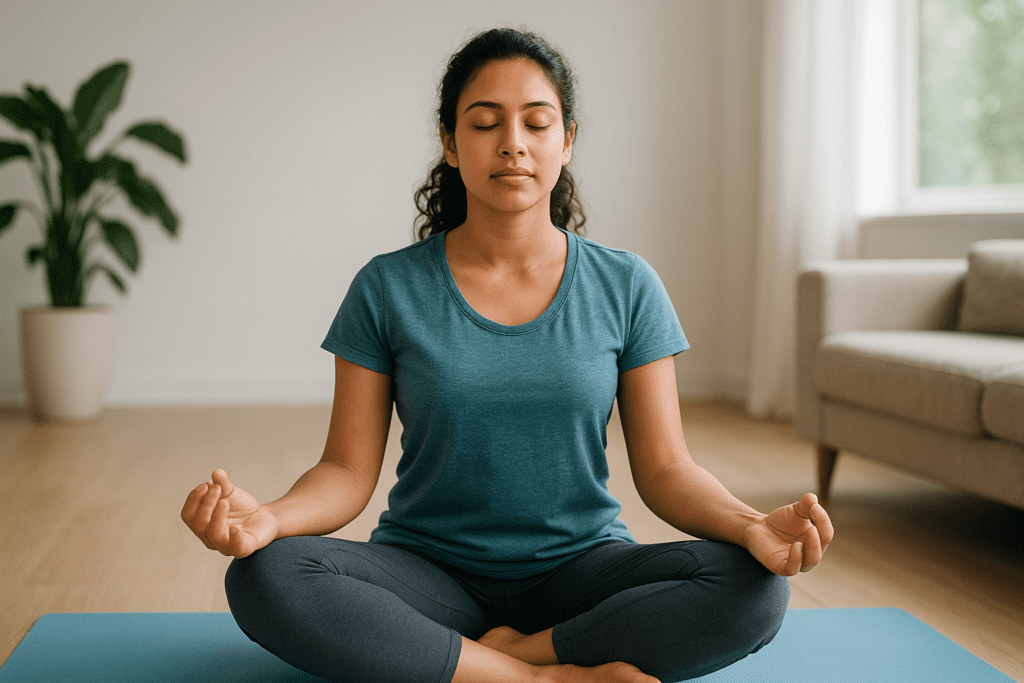
Mindfulness meditation trains your attention to stay present rather than ruminating about past events or worrying about future threats. When you practice regularly, you build the neural pathways that support emotional regulation and reduce reactivity to stressors. Unlike other stress management techniques that provide temporary relief, mindfulness creates lasting changes in how your brain processes stress. You learn to observe thoughts and sensations without getting swept away by them, which breaks the cycle of stress amplification.
Why it works
Research shows that consistent mindfulness practice increases gray matter density in brain regions associated with emotional regulation and self-awareness while decreasing activity in the amygdala, your brain’s threat detection center. This isn’t about achieving perfect calm but about changing your relationship with stress. You develop the capacity to notice stress arising without automatically reacting to it, creating space between trigger and response.
How to practice it
Set aside 10 to 20 minutes daily for formal practice. Sit comfortably with your eyes closed and focus on your natural breath. When your mind wanders (and it will), gently redirect attention back to breathing without judgment. Start with shorter sessions and gradually increase duration. Consistency matters more than perfection. Many people find morning practice sets a calmer tone for the entire day.
“Regular mindfulness practice doesn’t eliminate stress but fundamentally changes how you respond to it, replacing automatic reactivity with intentional choice.”
Best for
This technique benefits people who experience rumination, difficulty letting go of worries, or emotional reactivity that seems disproportionate to situations. It works well for generalized stress rather than acute crisis moments and complements other interventions by building baseline resilience.
Common mistakes to avoid
Don’t expect immediate mastery or judge yourself for having thoughts during meditation. Mental wandering is normal and noticing it is actually the practice, not a failure. Avoid inconsistent practice patterns where you meditate intensely for a week then stop completely. Brief daily sessions produce better results than occasional long ones.
5. Move your body with planned exercise
Physical activity stands as one of the most researched and effective stress management techniques available, yet many people overlook it or relegate exercise to a vague “someday” goal. Regular movement doesn’t just burn off nervous energy; it fundamentally changes your brain chemistry and stress response system. You don’t need intense workouts or gym memberships to see benefits. Structured, consistent movement at any intensity level produces measurable improvements in stress resilience, mood regulation, and physical health markers.
Why it works
Exercise increases production of endorphins and other neurochemicals that improve mood while simultaneously reducing levels of stress hormones like cortisol and adrenaline. Physical activity also improves sleep quality, which creates a positive feedback loop for stress management. Research shows that regular exercisers demonstrate lower physiological responses to stressors and recover from stress faster than sedentary individuals. Movement serves as a behavioral rehearsal for handling stress, teaching your body to return to baseline more efficiently after arousal.
How to practice it
Schedule 30 minutes of moderate activity most days of the week. Choose activities you genuinely enjoy rather than forcing yourself through workouts you hate. Walking, swimming, cycling, dancing, or strength training all produce stress reduction benefits. Consistency matters more than intensity. Break longer sessions into 10-minute segments if needed. Track your commitment on a calendar to build accountability and recognize patterns between activity and stress levels.
“Planned exercise creates predictable stress relief rather than leaving you at the mercy of sporadic motivation or convenience.”
Best for
This approach works for people dealing with chronic stress, those experiencing physical tension alongside mental stress, and anyone needing an outlet for pent-up energy. Exercise particularly benefits individuals whose stress manifests as restlessness, irritability, or difficulty concentrating.
Common mistakes to avoid
Don’t wait for motivation to strike or rely on intense weekend workouts to compensate for sedentary weekdays. Avoid choosing activities based solely on calorie burn rather than enjoyment, which leads to inconsistency. Skip the all-or-nothing mindset where missing one session derails your entire routine.
6. Protect sleep with CBTi-based skills
Poor sleep and chronic stress create a vicious cycle where each makes the other worse. Cognitive Behavioral Therapy for Insomnia (CBTi) provides structured strategies that break this pattern by addressing both the behaviors and thoughts that sabotage rest. Unlike sleep medications that mask symptoms, CBTi teaches you to rebuild your natural sleep architecture through specific behavioral changes. The techniques work even if stress isn’t your only sleep disruptor, making this one of the most versatile stress management techniques for improving overall resilience.
Why it works
CBTi directly targets the physiological hyperarousal that stress creates, which keeps your nervous system activated when you should be winding down. The approach strengthens your circadian rhythm and builds stronger associations between your bed and actual sleep rather than worry or wakefulness. Research demonstrates that CBTi produces longer-lasting improvements than medication, with effects maintained years after treatment ends. Better sleep dramatically improves your capacity to handle daytime stressors and recover from difficult events.
How to practice it
Maintain a consistent sleep and wake time seven days per week, even on weekends. Restrict time in bed to match your actual sleep duration, which consolidates fragmented rest into deeper sleep. Leave the bedroom if you can’t fall asleep within 20 minutes and return only when drowsy. Create a 30-minute wind-down routine before bed that excludes screens, work discussions, or problem-solving.
“Sleep restriction paradoxically improves sleep quality by creating sufficient sleep pressure to overcome stress-related hyperarousal.”
Best for
These skills benefit anyone experiencing stress-related insomnia, difficulty shutting off racing thoughts at night, or middle-of-the-night awakenings with rumination. CBTi works particularly well if you’ve developed counterproductive sleep habits like excessive time in bed or irregular schedules that worsen both sleep and stress.
When to get professional support
Seek professional guidance if you experience chronic insomnia lasting more than three months, suspect a sleep disorder like apnea, or find that self-guided approaches produce minimal improvement after four weeks of consistent practice.
7. Reframe stress with CBT and ACT skills
Your thoughts about stress often cause more suffering than the stressful events themselves. Cognitive Behavioral Therapy (CBT) and Acceptance and Commitment Therapy (ACT) provide structured methods to identify and change unhelpful thinking patterns that amplify your stress response. These approaches don’t eliminate stressors but fundamentally alter how you interpret and respond to them. Rather than fighting every uncomfortable thought or situation, you learn to distinguish between productive problem-solving and unproductive worry spirals.
Why it works
CBT targets the automatic thoughts that escalate stress, like catastrophizing or all-or-nothing thinking, which trigger disproportionate emotional and physical responses. ACT complements this by teaching psychological flexibility, the ability to experience difficult thoughts without letting them control your behavior. Research shows that combining these approaches creates lasting changes in stress reactivity because you address both the content of your thoughts and your relationship to them.
How to practice it
Notice when stress spikes and identify the specific thought driving your reaction. Write it down and examine the evidence supporting or contradicting it. Ask yourself if this interpretation is the only possible one or if alternative explanations exist. Practice cognitive defusion by mentally adding “I’m having the thought that…” before stressful thoughts, which creates distance between you and the content. This simple prefix reminds you that thoughts are mental events, not facts requiring immediate action.
“Reframing doesn’t mean forcing positive thinking but recognizing that your initial interpretation of stress isn’t always accurate or helpful.”
Best for
These skills benefit people experiencing rumination, black-and-white thinking, or stress driven by predictions about future catastrophes. This approach works well if you find yourself overanalyzing situations or if your stress feels disconnected from actual threat levels.
Common mistakes to avoid
Don’t use these techniques to suppress or eliminate all negative thoughts, which backfires by increasing their frequency. Avoid treating reframing as a way to talk yourself out of legitimate concerns that require action. Skip the habit of reframing only during crisis moments rather than building the skill through regular practice.
8. Track triggers with a stress journal
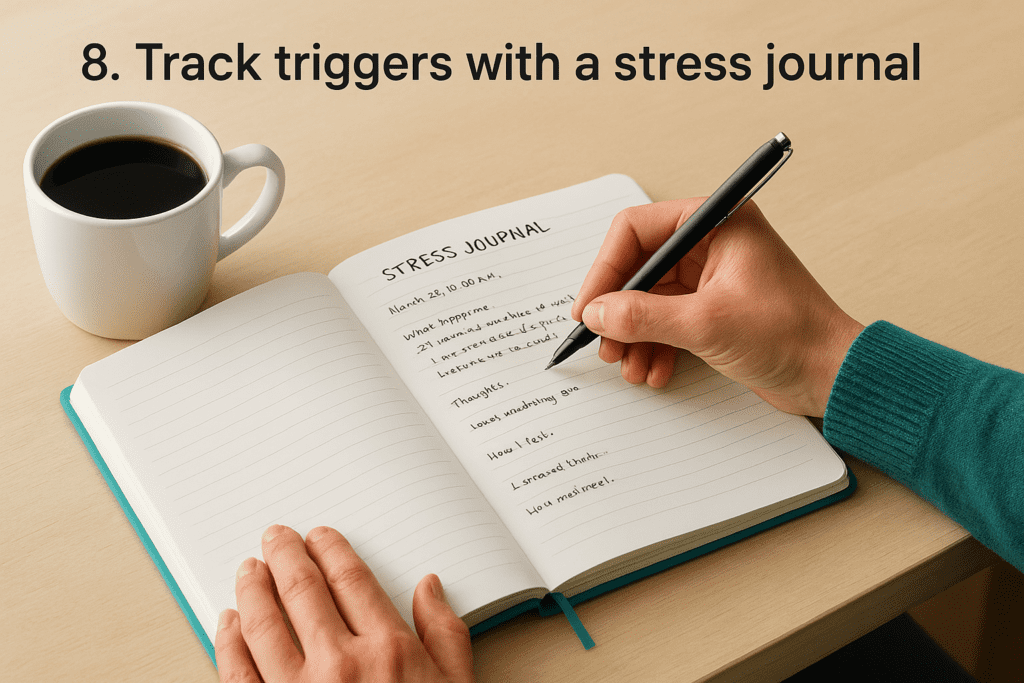
A stress journal transforms vague overwhelm into concrete data you can actually address. Most people experience stress as a formless cloud of pressure without recognizing the specific patterns and triggers driving their reactions. By documenting when stress occurs, what preceded it, and how you responded, you create an objective record that reveals connections your mind misses in the moment. This technique ranks among the simplest yet most underutilized stress management techniques because it requires minimal time investment while producing actionable insights.
Why it works
Writing about stressful experiences creates psychological distance that reduces emotional intensity while improving problem-solving capacity. Your journal becomes a diagnostic tool that identifies whether your stress stems from specific situations, certain times of day, or particular thought patterns. Research shows that expressive writing about stress decreases intrusive thoughts and improves immune function. The act of recording forces you to shift from reactive mode to observer mode, which activates different neural pathways and interrupts automatic stress responses.
How to practice it
Set aside 5 minutes daily to record stress episodes. Note what happened, your physical sensations, your thoughts, and how you responded. Rate stress intensity on a scale of 1 to 10. Review entries weekly to identify recurring themes or triggers you hadn’t consciously recognized. Focus on observable details rather than lengthy narrative descriptions.
“Consistent journaling reveals stress patterns that remain invisible when you’re caught up in the experience itself.”
Best for
Journaling benefits people who experience unpredictable stress or difficulty identifying what specifically triggers their reactions. This approach works well if you need to build a case for workplace accommodations or want concrete data before starting therapy.
Common mistakes to avoid
Don’t journal only during crisis moments or use entries to ruminate endlessly about problems. Avoid perfectionism about format or writing quality, which turns a helpful tool into another stressor. Skip lengthy processing in favor of brief, factual documentation that captures key information without excessive time commitment.
9. Use social support as a stress buffer
Social connection serves as one of your most powerful defenses against chronic stress, yet many people isolate themselves when overwhelmed. Research consistently shows that strong social support reduces cortisol levels, improves immune function, and accelerates recovery from stressful events. Unlike solitary stress management techniques that you practice alone, this approach leverages relationships to create resilience through shared experience and practical assistance. Your nervous system literally calms down faster when you feel supported by others who understand what you’re facing.
Why it works
Strong social bonds activate your parasympathetic nervous system, the biological system responsible for rest and recovery. When you talk through stress with trusted people, you process difficult experiences more effectively while gaining alternative perspectives that reduce catastrophic thinking. Support networks also provide tangible help with stressors like childcare, work problems, or health challenges, which reduces your overall burden. Studies show that people with robust social connections demonstrate lower baseline stress levels and better long-term health outcomes than socially isolated individuals.
How to practice it
Identify three people you can contact during stressful periods and communicate your specific needs rather than expecting others to guess. Schedule regular check-ins with friends or family, even brief phone calls, which maintain connection during calm periods so support exists when crisis hits. Join groups built around shared interests or challenges, whether through community centers, religious organizations, or online communities focused on specific stress sources. Ask for concrete help with tasks rather than just venting, which creates actionable relief.
“Social support works both ways: receiving help during stress and offering support to others both improve your stress resilience.”
Best for
This approach benefits people experiencing major life transitions, chronic health conditions, or workplace stress that feels isolating. Connection works particularly well if you tend toward avoidance or have difficulty processing emotions independently.
Common mistakes to avoid
Don’t wait until you’re in crisis to build your support network or rely exclusively on one person for all your emotional needs. Avoid relationships that drain you or turn conversations into complaint sessions without problem-solving. Skip the assumption that asking for help burdens others, which prevents you from accessing available support.
10. Train self-regulation with biofeedback and neurofeedback
Biofeedback and neurofeedback use real-time physiological data to teach you direct control over stress responses that normally operate outside conscious awareness. These technologies measure specific markers like heart rate variability, muscle tension, or brain wave patterns, then provide immediate feedback that helps you learn to regulate these systems deliberately. Unlike other stress management techniques that rely on consistent practice to produce change, you receive objective confirmation when your efforts work, which accelerates skill acquisition and builds confidence in your capacity to manage stress.
Why it works
Training creates lasting changes in how your nervous system responds to stress by strengthening pathways between conscious intention and automatic regulation. You learn to recognize subtle shifts in your physiological state before stress escalates, giving you earlier intervention points. Research shows that both biofeedback and neurofeedback produce measurable improvements in stress resilience that persist after training ends because you’ve fundamentally retrained your regulatory systems rather than just applying coping strategies.
How it looks in training
You work with a trained provider who attaches sensors to monitor specific physiological markers relevant to your stress patterns. Visual or auditory feedback shows you in real time when you successfully shift toward calmer states. Your provider guides you through exercises while you watch the feedback, helping you identify which mental strategies produce desired changes. Sessions typically last 30 to 60 minutes and occur weekly, with most people completing 10 to 20 sessions.
“Real-time feedback removes the guesswork from stress regulation training by showing you exactly when your efforts produce physiological change.”
Best for
These approaches benefit people with chronic stress that hasn’t responded to other interventions, those experiencing specific physiological symptoms like tension headaches or elevated blood pressure, and individuals who prefer concrete data over subjective assessment of progress.
When to get professional support
Seek qualified providers certified in biofeedback or neurofeedback through professional organizations. These techniques require specialized equipment and expertise that make home practice impractical without proper training and guidance from experienced practitioners.
Your next steps
You now have ten evidence-based strategies that address both the mental and physical dimensions of stress. The most effective approach combines multiple stress management techniques rather than relying on a single method. Start with one or two techniques that match your specific stress patterns, practice them consistently for at least two weeks, and gradually add others as you build confidence. Track your progress using the stress journal method to identify which interventions produce the strongest results for your unique situation.Professional support accelerates progress when stress interferes with your daily functioning or when self-guided approaches produce limited results. At Integrative Psychology, we combine traditional psychotherapy with physiological interventions like biofeedback and neurofeedback to create personalized treatment plans that address your whole system. Schedule a consultation to work with our team and develop a comprehensive approach tailored to your unique stress triggers and goals. Your stress response can change with the right support and consistent practice.


