


Stress Management: What Is Stress Management? Why It Matters

Your body tenses, your mind races, and sleep becomes elusive. These experiences are universal, yet how we respond to them makes all the difference. Understanding what is stress management goes beyond simple relaxation techniques, it involves recognizing how your mind and body interact under pressure and developing practical skills to restore balance.
Stress affects more than your mood. It influences your cardiovascular system, immune function, sleep quality, and even how you experience physical pain. When left unaddressed, chronic stress contributes to a cascade of health problems that blur the line between psychological and physical well-being. This is precisely why an integrative approach, one that considers both mental and physiological factors, offers more lasting relief than addressing symptoms in isolation.
At Integrative Psychology, we work with adults who want more than surface-level coping strategies. Our practice combines evidence-based psychotherapy with mind-body interventions like biofeedback and mindfulness training to help clients build genuine resilience against stressors. This article will walk you through what stress management actually means, why it matters for your overall health, and the specific techniques that research supports for creating meaningful change.
What stress management means
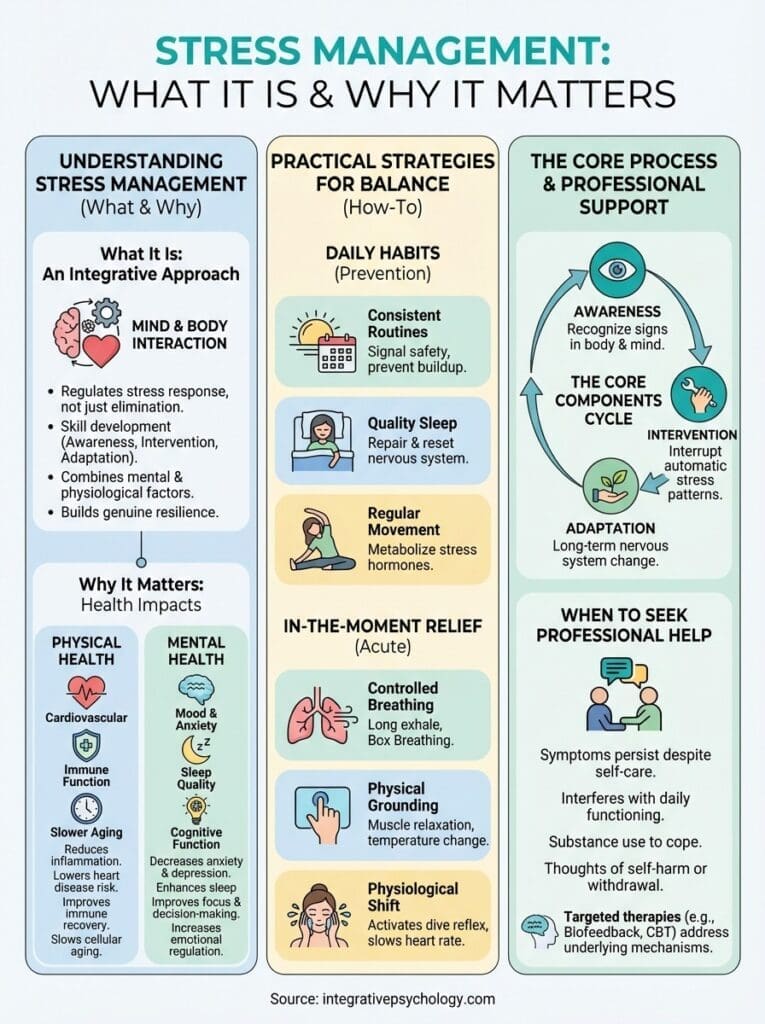
Stress management refers to the intentional use of techniques and strategies to regulate your body’s stress response and maintain psychological equilibrium when facing demands or pressures. This goes beyond temporary distraction or avoidance. Instead, it involves developing skills that change how you perceive stressors and how your nervous system reacts to them. You learn to recognize early warning signs in your body, interrupt automatic stress patterns, and build resilience that carries across different situations.
The core components
Understanding what is stress management requires looking at three interconnected elements: awareness, intervention, and adaptation. Awareness means noticing when your body shifts into a stress response, whether that shows up as muscle tension, rapid breathing, or racing thoughts. You cannot change what you do not recognize, so this foundational skill informs everything else. Intervention involves the specific techniques you use to interrupt the stress cycle, from breathing exercises to cognitive reframing. Adaptation refers to the longer-term changes in how your nervous system responds over time as you practice these skills consistently.
Effective stress management transforms your relationship with pressure rather than simply eliminating stressors from your life.
Your stress response exists for survival, triggering the fight-or-flight cascade that prepares your body for immediate action. Problems arise when this response activates too frequently or stays activated too long. Modern stressors like work deadlines, relationship conflicts, or financial concerns do not require physical escape or combat, yet your body still responds as if they do. Stress management retrains this system to distinguish between genuine threats and everyday pressures, allowing you to respond with intention rather than react on autopilot.
What stress management is not
Many people confuse stress management with complete stress elimination, but that is neither realistic nor desirable. Some stress motivates you, sharpens focus, and drives performance. The goal centers on managing your response to stress rather than creating a pressure-free existence. You build capacity to handle challenges without depleting your physical and mental resources in the process.
Similarly, stress management differs from simple relaxation or leisure activities. While taking time off or enjoying hobbies provides temporary relief, these activities alone do not teach your nervous system new response patterns. Genuine stress management involves active skill development that changes how your body and mind process stressors. You practice specific techniques that you can deploy in real-time when pressure increases, not just when you have free time.
The mind-body integration
Your psychological state directly influences your physical functioning, and your body’s physiological state shapes your emotional experience. When your heart rate elevates and your muscles tense, your brain interprets these signals as indicators of threat, which amplifies anxious thoughts. Conversely, when you use techniques that calm your nervous system at the physiological level, your mind naturally settles as well. This bidirectional relationship explains why effective stress management addresses both dimensions simultaneously.
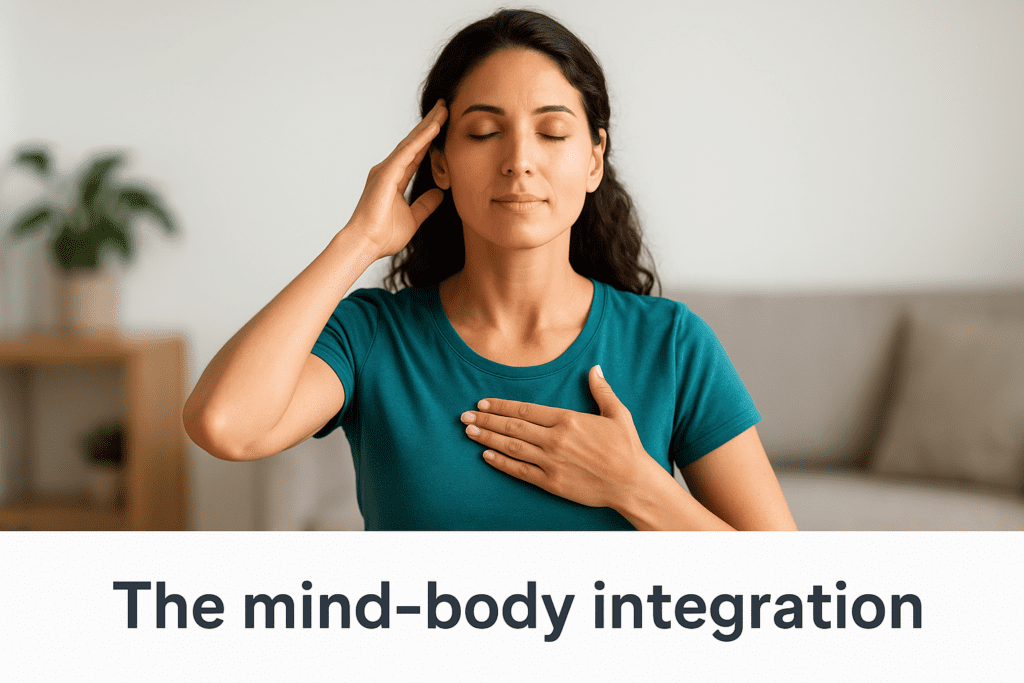
Traditional talk therapy focuses primarily on thoughts and emotions, while behavioral medicine incorporates physiological interventions like biofeedback or breathing training that directly influence your nervous system. Combining these approaches creates more comprehensive change than either method alone. You learn to recognize how stress manifests in your specific body, understand the thoughts that perpetuate stress cycles, and practice concrete techniques that interrupt both the physical and mental components of your stress response.
Why stress management matters for your health
Your health depends on more than just what you eat or how much you exercise. Chronic stress creates a cascade of physiological changes that directly harm your cardiovascular system, weaken your immune function, and accelerate aging at the cellular level. When you understand what is stress management and apply it consistently, you interrupt these harmful processes before they compound into serious health conditions. The research shows clear connections between unmanaged stress and increased risk for heart disease, diabetes, autoimmune disorders, and chronic pain conditions.
The physical health connection
Prolonged stress keeps your body in a state of heightened alert that wears down essential systems. Your blood pressure remains elevated, cortisol levels stay chronically high, and inflammation spreads throughout your body. These changes do not happen overnight, but accumulate gradually until symptoms become impossible to ignore. You might notice persistent headaches, digestive problems, muscle tension that never fully releases, or an immune system that leaves you catching every cold that circulates through your environment.

Managing stress effectively reduces your risk of developing serious health conditions by up to 40%, according to multiple longitudinal studies.
Research demonstrates that people who practice stress management techniques regularly show measurably lower inflammation markers in their bloodwork compared to those who do not. Your body literally operates differently when you have skills to regulate your stress response. Blood vessels maintain better elasticity, your heart rate variability improves (a key marker of cardiovascular health), and your digestive system functions more efficiently. These changes translate into tangible health outcomes that extend far beyond simply feeling better in the moment.
The mental health dimension
Stress amplifies every mental health challenge you might already face. Anxiety becomes more intense, depression deepens, and your capacity for emotional regulation decreases when stress remains unmanaged. Your brain chemistry shifts under chronic stress, with reduced serotonin and dopamine availability affecting your mood, motivation, and ability to experience pleasure. Sleep suffers as your mind races at night, which then compounds stress the following day in a self-reinforcing cycle that becomes progressively harder to break.
Beyond diagnosable conditions, stress erodes your quality of life in subtle but significant ways. Your patience wears thin, relationships suffer strain, and work performance declines even when you try your hardest to maintain standards. Decision-making becomes impaired, memory consolidation weakens, and you find yourself operating in survival mode rather than pursuing meaningful goals. These impacts justify prioritizing stress management not as optional self-care, but as essential maintenance for your psychological functioning.
How stress affects your body and mind
Stress triggers measurable changes throughout your entire system, from the chemical messengers in your brain to the tension patterns in your muscles. Your body does not distinguish between physical danger and psychological pressure. Both activate the same physiological response that floods your bloodstream with cortisol and adrenaline, redirects blood flow away from digestion toward your limbs, and sharpens your senses for immediate action. When this response fires repeatedly without adequate recovery, the consequences accumulate in ways that fundamentally alter how your body and mind operate.
The physical cascade
Your cardiovascular system bears significant burden under chronic stress. Blood pressure rises as your heart pumps harder and faster, attempting to deliver oxygen to muscles preparing for action that never comes. Blood vessels constrict, restricting circulation to your extremities while increasing wear on arterial walls. Over time, this pattern damages the delicate endothelial lining of your arteries, creating conditions ripe for plaque buildup and cardiovascular disease.
Simultaneously, your immune function weakens as stress hormones suppress the production of infection-fighting white blood cells. You become more susceptible to illness and take longer to recover from injuries or infections. Your digestive system slows or becomes erratic since your body prioritizes survival functions over processes like nutrient absorption. Chronic inflammation spreads throughout tissues, contributing to everything from joint pain to increased cancer risk. These changes explain why understanding what is stress management becomes crucial for preventing serious health deterioration.
How your brain changes under stress
Prolonged stress physically reshapes neural pathways in your brain. The amygdala, your brain’s threat detection center, becomes hyperactive and oversized through repeated stress exposure. Your prefrontal cortex, responsible for rational thinking and emotional regulation, actually shrinks when cortisol levels remain elevated. Memory formation suffers as stress interferes with the hippocampus, the brain region that consolidates new information into long-term storage.
Chronic stress can reduce brain volume in areas critical for self-control, memory, and emotional processing by up to 20% within just months of sustained exposure.
Neurotransmitter balance shifts dramatically under stress. Serotonin and dopamine levels drop, affecting your mood, motivation, and capacity for pleasure. Your brain becomes wired for threat vigilance rather than reward processing, making it progressively harder to experience positive emotions even when stressful circumstances improve. These neurological changes create the biological foundation for anxiety and depression while simultaneously making it more difficult to implement stress management strategies.
The feedback loops that intensify symptoms
Your physical stress symptoms trigger psychological distress, which then amplifies your physical response in self-reinforcing cycles. When your heart races and your breathing becomes shallow, your brain interprets these signals as confirmation of danger. This perception intensifies the stress response, creating more physical symptoms that fuel additional worry. Sleep disruption from nighttime cortisol elevation leaves you exhausted, which decreases your emotional resilience and makes stressors feel more overwhelming the following day.
How to manage stress day to day
Daily stress management relies on consistent practices that recalibrate your nervous system rather than waiting until stress becomes overwhelming. You build resilience through small, repeated actions that compound over time, creating a buffer against inevitable pressures. These strategies differ from emergency interventions because they work preventatively, shifting your baseline stress level downward so that challenges do not push you past your coping threshold as easily. When you understand what is stress management means in practical terms, you recognize that daily habits matter more than occasional interventions.
Building routines that regulate your nervous system
Your nervous system craves predictability and responds positively to structured patterns. Morning and evening routines create bookends that signal safety to your body, helping transition between rest and activity states. Simple practices like consistent wake times, brief morning stretching, or five minutes of breathing exercises before bed teach your system to expect calm rather than chaos. These routines do not need complexity to work effectively. Consistency matters more than duration.
Daily stress management practices reduce your baseline cortisol levels by up to 25%, creating measurable improvements in how your body handles unexpected stressors.
Scheduling breaks throughout your day prevents stress accumulation rather than trying to recover from exhaustion later. You might set reminders to stand and move every hour, practice three conscious breaths between tasks, or step outside briefly during lunch. These micro-practices interrupt the stress buildup that happens when you push through continuously. Your nervous system needs regular downshifts to maintain optimal functioning, similar to how engines need coolant to prevent overheating.
Sleep as your foundation
Quality sleep determines how effectively you manage stress the following day. Your body repairs stress-induced damage during deep sleep stages while consolidating emotional experiences and resetting neurotransmitter balance. When sleep suffers, your stress tolerance plummets and minor irritations feel overwhelming. Protecting your sleep means establishing a consistent bedtime, reducing screen exposure before rest, and creating environmental conditions like darkness and cool temperatures that support natural sleep architecture.
Movement and physical release
Physical activity metabolizes stress hormones that accumulate in your system. Regular movement does not require intense workouts to provide benefit. Walking, stretching, or gentle yoga release muscular tension while signaling safety to your nervous system. Aim for movement that feels sustainable rather than punishing, as the goal centers on consistent practice rather than peak performance. Your body processes stress through physical pathways, making movement an essential component of daily management rather than optional exercise.
In-the-moment stress relief you can use anywhere
Acute stress hits without warning during meetings, traffic jams, or difficult conversations. Your ability to deploy immediate interventions determines whether stress escalates or resolves quickly. These techniques work precisely because they target your physiology directly, creating measurable changes in heart rate, blood pressure, and nervous system activation within minutes. Understanding what is stress management includes mastering these portable skills that require no equipment or special environment, making them accessible whenever pressure spikes.
Breathing techniques that reset your nervous system
Your breath provides direct access to autonomic nervous system regulation. Extending your exhale longer than your inhale activates your parasympathetic response, the rest-and-digest state that counteracts stress activation. Try breathing in for a count of four, then exhaling for a count of six or eight. Repeat this pattern for two minutes while sitting, standing, or even walking. Your heart rate will measurably decrease as carbon dioxide levels normalize and your vagus nerve signals safety to your brain.

Controlled breathing can reduce your heart rate by 10-15 beats per minute within just 90 seconds, creating immediate physiological calm.
Box breathing offers another reliable pattern. Inhale for four counts, hold for four, exhale for four, hold for four, then repeat. This technique works particularly well when your mind races because counting occupies your attention while the rhythm regulates your nervous system. Military personnel and emergency responders use this method in high-pressure situations precisely because it delivers consistent results regardless of external circumstances.
Physical grounding methods
Muscular tension holds stress in your body even when you try to think your way calm. Progressive muscle relaxation releases this physical holding by intentionally tensing then relaxing muscle groups. Squeeze your fists tightly for five seconds, then release completely while noticing the difference in sensation. Move through your shoulders, jaw, and legs using the same pattern. This technique works by teaching your muscles what genuine relaxation feels like through contrast, making it easier to release involuntary tension.
Temperature changes provide another immediate intervention. Splashing cold water on your face or holding ice cubes activates your dive reflex, which automatically slows your heart rate. Your body interprets the cold signal as preparation for water immersion and shifts into conservation mode that contradicts the stress response. This physiological override works when other techniques feel too subtle or require more concentration than you can muster during peak stress.
When to get professional support
Self-management strategies work effectively for everyday stress, but certain situations require professional expertise. You need outside support when stress consistently interferes with your daily functioning, regardless of which techniques you try on your own. Recognizing this threshold protects you from suffering unnecessarily while believing you should handle everything independently. Professional intervention provides specialized assessment and treatment approaches that target the specific mechanisms maintaining your stress response, creating change that proves difficult to achieve alone.
Signs that self-management isn’t enough
Your stress exceeds self-management capacity when symptoms persist despite consistent practice of stress reduction techniques. If you maintain regular breathing exercises, movement routines, and sleep hygiene yet still experience overwhelming anxiety, physical symptoms that worsen, or inability to concentrate, these patterns signal that deeper intervention becomes necessary. Similarly, when stress triggers thoughts of self-harm, substance use to cope, or complete withdrawal from relationships and responsibilities, you need immediate professional assessment.
Professional stress management expands what is stress management by adding physiological monitoring, trauma processing, and medication evaluation that self-help approaches cannot provide.
Physical symptoms that resist basic interventions also indicate professional support would help. Persistent insomnia that continues despite sleep hygiene improvements, chronic pain that worsens under stress, or digestive problems that dominate your experience all benefit from behavioral medicine approaches. These symptoms suggest your nervous system requires more sophisticated intervention than general stress management techniques can deliver alone.
What professional intervention provides
Practitioners trained in stress management assess which specific mechanisms drive your stress response rather than applying generic solutions. They identify whether trauma underlies your reactivity, whether cognitive patterns fuel anxiety, or whether physiological dysregulation requires targeted treatment like biofeedback. This precision matters because effective treatment matches your specific presentation rather than assuming all stress functions identically across people.
Professional support also offers accountability and structure that proves difficult to maintain independently. You work with someone who tracks your progress objectively, adjusts techniques based on your response, and provides encouragement when motivation wanes. Treatment modalities like Cognitive Behavioral Therapy directly restructure thought patterns that perpetuate stress, while interventions like neurofeedback retrain your nervous system at the physiological level. These approaches combine assessment, skill-building, and physiological intervention in ways that self-directed efforts cannot replicate, making professional support valuable rather than admitting failure.
A simple way to start today
You now understand what is stress management actually involves and why it matters for both your physical and mental health. Rather than attempting to overhaul everything at once, choose one technique from this article that resonates with your current situation. You might start with two minutes of breathing exercises each morning, commit to a ten-minute walk during lunch, or establish a consistent bedtime routine. Consistency with a single practice builds momentum more effectively than sporadic attempts at multiple strategies.
Your nervous system responds to repeated patterns, so practicing the same technique daily creates lasting change even when the practice feels small. Track your baseline stress level for one week, then implement your chosen technique and measure again after two weeks. This data shows whether the approach works for your specific physiology.
When self-management reaches its limits, professional support provides the specialized assessment and treatment your nervous system requires. Integrative Psychology offers evidence-based therapy combined with physiological interventions that address both the mental and physical dimensions of stress for lasting relief.


